
Kids Monster Truck Games 2+
Toy Tap LLPEducational
4.653.00 Reviews
- Version
- 6.6.3
- Installs
- 10.00M
- Age Rating
- Everyone
Screenshots
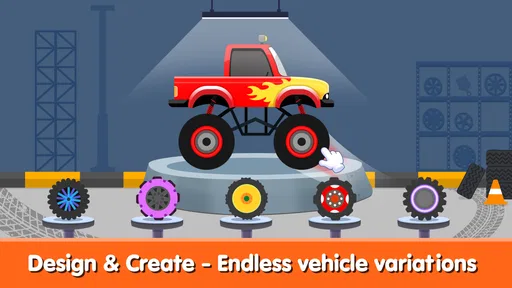
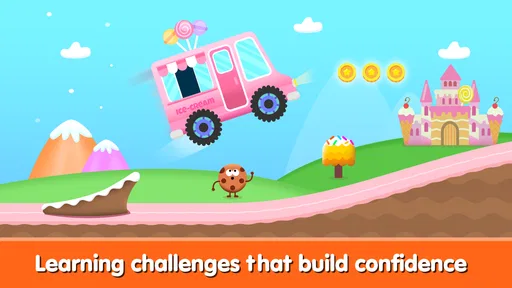
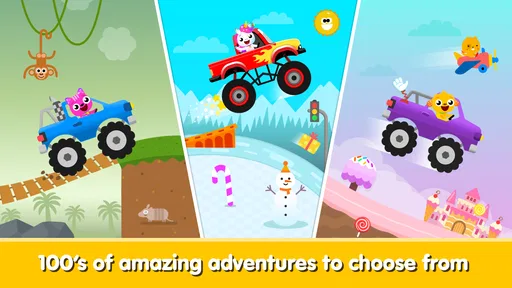
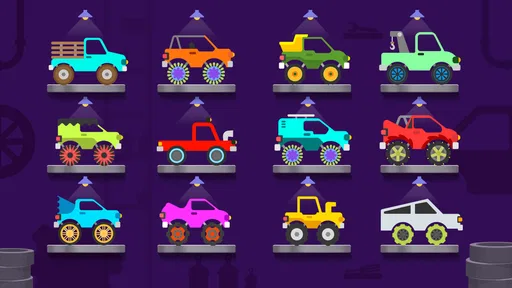
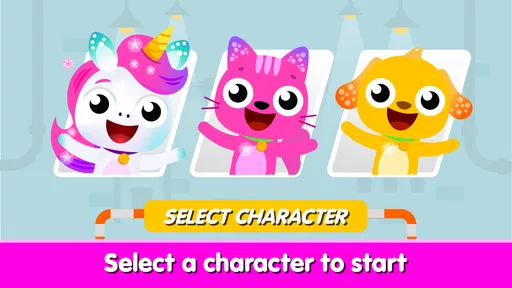
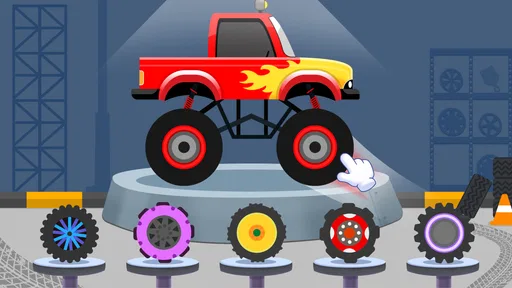
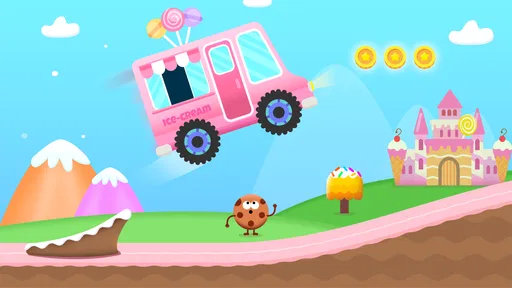
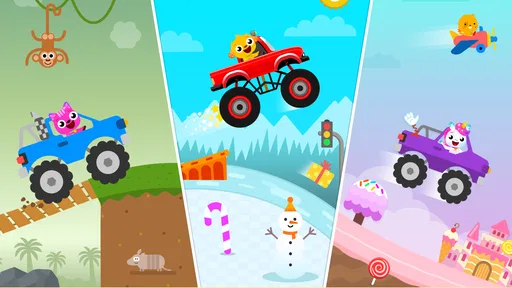
Our Review of Kids Monster Truck Games 2+
 Analysis by Appyee
Kids Monster Truck Games 2+ is the kind of game that can win a child’s attention quickly: bright monster trucks, simple touch interaction, and an educational setting that feels more like play than a lesson. I spent time looking at it from the point of view of a parent choosing something for short, independent play sessions, and my main question was not whether a young child would enjoy the first few minutes. That part is easy. The more useful question is whether it still earns a place on a device after the novelty of a new truck wears off.
My overall impression is positive, with an important qualification. This is best understood as a gentle early-learning game built around monster-truck play, not as a deep driving game or a complete preschool curriculum. It can be a handy choice when a child wants something colorful and immediately understandable, especially during a short wait or a quiet period at home. At the same time, its lasting value depends heavily on how adults present it and how often it is rotated with other activities.
What the first week feels like
The opening appeal comes from the theme. A monster truck gives the game a clear identity that is more exciting to many children than a plain collection of educational exercises. The idea of driving, exploring, and interacting with big vehicles creates a playful frame around learning. For a child who already likes trucks, that frame can make the difference between willingly trying an activity and abandoning it immediately.
I also like the age positioning. The game is marked for Everyone and is aimed at very young players, so the experience is not asking a preschooler to understand complicated rules before having fun. That matters in the first week, because a child can approach it without needing a long explanation from an adult. A parent can hand over the device, demonstrate the basic interaction, and then watch whether the child begins experimenting independently.
That simplicity has a practical advantage during real family routines. Imagine a child waiting while a sibling finishes an appointment or sitting beside a parent during a short journey. A game with a monster-truck theme can provide a focused activity without requiring a long story to follow. I would use it in those moments as a brief diversion, rather than treating it as a replacement for outdoor play, picture books, or hands-on toys.
The first few sessions are also useful for discovering how your child responds to the game’s style. Some children enjoy repeating the same kind of action and are happy to explore at their own pace. Others immediately look for more variety, more challenge, or a stronger sense of progress. That difference becomes important later. The game may feel fresh for one child for several weeks and become familiar much sooner for another.
One tip I found valuable is to resist introducing it as “learning time.” Calling it a truck game usually creates less pressure. After a session, an adult can ask the child to describe what happened, identify colors or objects, or invent a small story about the vehicle. This turns passive screen time into a conversation without forcing the game itself to carry every educational goal.
Where the educational angle helps
Educational games for very young children often work best when they connect a recognizable interest with simple interaction. Here, the monster-truck theme gives adults an easy starting point for extending the experience away from the screen. A child might draw a truck, count toy vehicles, compare large and small objects, or make a pretend track with cushions. The game becomes a prompt for play rather than an isolated activity.
I would not expect it to teach a child a broad set of skills by itself. Its strength is engagement: it can make a young player more willing to pay attention, try again, and talk about what they see. That is a worthwhile role, but it is narrower than what parents sometimes expect from the word “educational.” For structured learning, an app designed around a specific subject may be a better fit.
The developer is Toy Tap LLP, and the game has reached a 4.8 average from around 5.7 thousand ratings, alongside more than 10 million installs. Those figures suggest that the simple truck concept has found a substantial audience. I still would not use popularity as a substitute for observing your own child. A highly rated game can be a great match for one preschooler and a poor match for another, particularly when attention span and preferred play style differ.
What parents should check early
During the first week, I would watch three things rather than simply asking whether the child smiles while playing. First, does the child understand the interaction without constant help? Second, does the game encourage curiosity, or does the child tap rapidly just to reach the next visual effect? Third, after several sessions, does the child remember anything from the activity or use the theme in offline play?
These observations reveal more than a single entertaining session. If the child begins making up truck adventures or talking about what happened, the game is contributing to imaginative play. If the child only asks for the same screen and becomes upset when it ends, the app may be functioning mainly as a distraction. Neither result makes it automatically good or bad, but it tells me how carefully I should manage access.
There is also a financial point to notice. The game is free to download, while in-app purchases are listed at $2.99 per item. I would review the purchase controls on the device before giving it to a child, even if I plan to use only the free content. Young children do not distinguish clearly between a game action and a purchase prompt, so adult supervision around any optional content is sensible.
Whether it survives beyond the novelty
The first month is where a children’s game has to prove more than its visual theme. A monster truck is an effective hook, but a hook is not the same as recurring value. In my view, this game is most likely to remain useful when it is treated as one option in a small rotation. Used occasionally, it can feel inviting each time. Used several times every day, it may become predictable faster than a parent expects.
That does not mean repetition is always a weakness. Repetition can be valuable for young children because it gives them a chance to gain confidence. A child who needed help at the beginning may later navigate independently, make choices more deliberately, or explain the activity to an adult. The trade-off is that repeated play should ideally lead to some new conversation or offline extension. Without that, the same interaction can turn into background tapping.
My preferred routine would be to keep sessions short and vary the purpose. One day, I might let the child explore freely. Another day, I could use the truck theme to practice words such as big, small, fast, slow, up, and down. On a different day, I would stop after the child has finished a simple activity and move to toy trucks or drawing. This approach gives the game a changing role, which helps prevent it from becoming a single repetitive habit.
A useful, less obvious benefit is that a familiar game can serve as a bridge between independent play and shared play. A child may begin alone, then invite a parent to watch or explain what the truck is doing. Instead of taking over the device, I would ask the child to be the guide. That reverses the usual dynamic: the adult is not merely supervising screen time but encouraging the child to communicate and make decisions.
For travel, the game may be more practical than a larger educational app that requires a long sequence or a complicated setup. Its recognizable theme can help settle a child during a short transition. However, I would not depend on it as the only travel activity. A device can run out of power, a child can lose interest, and a familiar game cannot replace the sensory variety of books, stickers, conversation, or looking out of the window.
Who is likely to keep using it
I think it has the best chance of lasting with children who already enjoy vehicles and like repeating familiar actions. It can also suit a younger player who is building confidence with touch controls and needs an inviting theme rather than a demanding challenge. Parents looking for a free starting point in the educational game category may appreciate that the entry barrier is low.
It is less convincing for a child who wants detailed driving physics, racing competition, construction systems, or a strong progression structure. The truck theme alone will not satisfy every child who likes vehicles. A child who is ready for more complex problem-solving may quickly outgrow a simple preschool experience, while a child who dislikes vehicles may never get past the central idea.
I would also skip it as a primary choice if your goal is focused practice in reading, mathematics, language learning, or another defined school subject. The educational value here is connected to playful engagement, not a substitute for a carefully sequenced lesson. In that situation, a dedicated learning app or an adult-led activity would offer clearer progress and a better match for the goal.
The maintenance burden for families
By maintenance, I mean more than technical upkeep. The real work is deciding when to offer the game, what to do if the child asks for it repeatedly, and whether optional purchases are appropriate. A free game can still create household friction if access is unlimited or if a child associates every quiet moment with a screen.
For that reason, I would set expectations before the first session. A simple rule such as “we play after this activity” or “we stop when the timer ends” is easier for a young child than an unexpected removal of the device. The game itself may be simple, but the surrounding routine determines whether it becomes a manageable tool or a source of arguments.
Version 6.6.1 is the current version, and the game requires Android 7.0 or later. That makes device compatibility worth checking before planning around it, particularly if the child uses an older hand-me-down phone or tablet. I would also test the game myself after installation, not because the child needs a technical briefing, but because adults should know how the opening experience feels and where a child might need help.
Another practical tip is to keep the game in a child-focused folder rather than placing it beside every adult entertainment app. This small organizational choice changes how the device is perceived. The child sees a limited selection instead of a large menu of distractions, and the parent can offer a deliberate choice. If the device is shared, a separate child profile or a supervised setup is preferable whenever available on that device.
The purchase model deserves ongoing attention. With each item priced at $2.99, a child could misunderstand optional content as something earned through tapping. I would never rely on a preschooler to recognize the boundary. Before regular use, I would check the device’s purchase authentication and make sure the child cannot complete a transaction accidentally. This is not a criticism unique to this game; it is simply part of maintaining any free children’s app with optional paid items.
There is also the question of updates and storage, although I would keep the response simple: if the game remains installed, check occasionally that it still opens properly and that the device has enough room for normal use. Parents do not need to turn this into a technical project. A quick adult check is enough to avoid handing a child a device that suddenly requires troubleshooting.
What can cause fatigue
The largest risk is thematic fatigue. Monster trucks are visually strong, but the same strength can become limiting if every activity feels like another version of the same truck fantasy. A child may still enjoy the vehicle while no longer gaining much from the interaction. When that happens, I would pause rather than immediately buying optional content in the hope that more material will solve the problem.
Another source of fatigue is adult repetition. Parents may find themselves hearing the same sounds, watching the same actions, or answering the same requests many times. That matters because a game that is tolerable for a child can become exhausting for the household. Rotating it with quieter activities protects both the child’s interest and the adult’s patience.
There is also a subtle risk of confusing activity with learning. A child can be busy on a screen without building a durable skill. I would look for signs of transfer: new vocabulary, better turn-taking, imaginative play, or a willingness to solve a small problem without immediate help. If none of those appear after regular use, I would reduce the game’s role and choose an activity with a clearer purpose.
Compared with ordinary toy trucks, this game offers convenience, animation, and a guided digital setting, but it cannot provide the same physical coordination or open-ended construction. Compared with a video, it may invite more interaction, yet it still keeps the child in a passive environment if an adult never joins the conversation. Compared with a specialized educational app, it may be more motivating for a truck-loving child but less precise for a particular learning target.
That comparison helped me place it fairly. I would not ask it to replace all three alternatives. I would use the digital truck experience when I need a compact, familiar activity, then switch to physical trucks for movement and imagination, books for language, and focused learning tools when a specific skill matters. Its value comes from fitting into that mix, not dominating it.
My long-term verdict
After the initial excitement fades, Kids Monster Truck Games 2+ still has a reasonable place in a young child’s app rotation, but I would not call it an essential installation for every family. Its strongest qualities are immediate accessibility, a theme that can motivate vehicle-loving children, and an educational framing that feels approachable rather than demanding. The free price makes it easy to try, while the Everyone rating suits its intended young audience.
The lasting value is conditional. I would keep it installed if my child returned to it willingly, used the truck theme in offline play, and accepted clear limits around when the game was available. I would remove or pause it if it became a constant negotiation, if the child stopped exploring and only tapped automatically, or if a more focused educational need had become important.
My favorite way to use it is as a short bridge between activities: a few minutes of independent play, followed by a question, a drawing, or a real-world truck game. That workflow gives the app a job beyond filling silence. It also makes the educational label more meaningful because the adult helps connect digital actions with language, imagination, and everyday observation.
Families should also remember that the game’s popularity does not guarantee a long lifespan for each child. The 4.8 average and more than 10 million installs show broad interest, but individual fit depends on age, temperament, and tolerance for repetition. A child who loves monster trucks may keep finding reasons to return; another may enjoy the first week and then move on naturally.
My recommendation is therefore straightforward: try it as a supervised, rotating activity, not as an all-purpose learning solution. Toy Tap LLP has built a friendly entry point for young children who are drawn to big vehicles, and the game can create useful moments of conversation when adults extend the play beyond the screen. Just keep expectations realistic, secure the purchase settings, and watch for the point where the truck theme stops encouraging curiosity.
For a family wanting a light educational game with an immediately recognizable subject, it is worth a place on the shortlist. For a child seeking deep challenges, detailed driving, or structured academic progress, I would choose something more specialized. The real test is not whether a child enjoys the first session, but whether the game continues to support healthy, varied play after the novelty has gone.
Privacy and Permissions
See what permissions an app requests and how it handles your data.
- Other
- view network connections, full network access, prevent device from sleeping
Verdict
Strengths of Kids Monster Truck Games 2+
- Simple controls make it easy for young children to play independently.
- Bright monster trucks and colorful tracks keep gameplay visually engaging.
- Short levels suit children with limited attention spans.
- Offline play is useful during travel or without an internet connection.
- Gentle gameplay avoids complex competition and frustrating difficulty spikes.
Limitations of Kids Monster Truck Games 2+
- Repetitive races may become less engaging after extended play sessions.
- Some content or vehicles may require in-app purchases to unlock.
- The app may display advertisements that interrupt the child’s experience.
- Limited customization options reduce variety for children who want more control.
- Sound effects and music may feel noisy without parental volume adjustment.
Other Releases by Toy Tap LLP
View All
Coloring and Drawing For Kids
Educational4.7

Toddler Car Games For Kids 2-5
Educational4.7

Coloring and Drawing For Girls
Educational4.7

Mini Dress Up & Beauty Games
Casual4.6
Similar Picks in This Category
View All
Little Panda Policeman
BabyBus4.0

Monster Trucks Game for Kids 2
Raz Games4.1

Little Panda's Chinese Recipes
BabyBus4.4

Little Panda's Restaurant
BabyBus4.4

Little Panda's Ice Cream Games
BabyBus4.3

Baby Panda Care
BabyBus3.8
Frequently Asked Questions
What is Kids Monster Truck Games 2+?
Kids Monster Truck Games 2+ is a colorful, child-friendly driving game designed for young children who enjoy monster trucks, simple challenges, and playful exploration. The game focuses on easy controls, bright graphics, and entertaining vehicle animations rather than complicated racing mechanics. Children can drive across imaginative environments, overcome basic obstacles, and enjoy satisfying sounds and visual effects at their own pace.
Is Kids Monster Truck Games 2+ suitable for toddlers and young children?
The game is aimed at very young players, including toddlers and preschool-aged children, because its controls are generally simple and its gameplay is easy to understand. There are no demanding instructions or advanced driving skills required. However, parents should still check the recommended age rating, supervise the first sessions, and review any advertising or purchase settings before allowing a child to play independently.
Does the game require an internet connection to play?
Kids Monster Truck Games 2+ may support offline gameplay for its main driving activities, which makes it convenient for travel or situations without Wi-Fi. Nevertheless, some features such as advertisements, external links, updates, or optional online content may require an internet connection. It is best to launch the game once while connected, then test its available modes in airplane mode before relying on it offline.
Are there advertisements or in-app purchases in Kids Monster Truck Games 2+?
Parents should check the current store listing and the in-game settings because monetization can vary between versions and platforms. Some editions of children’s games include advertisements, optional purchases, or links to other applications. Before handing the device to a child, adults should review parental controls, disable unauthorized purchases, and confirm whether the game offers an ad-free version or a paid upgrade.
What devices are compatible with Kids Monster Truck Games 2+?
Compatibility depends on the operating system, device model, and version of the application available in the Google Play Store or Apple App Store. Most recent Android and iOS phones and tablets should be considered first, but older devices may experience slower loading, reduced performance, or installation restrictions. Always check the official store page for the required operating-system version and available storage before downloading.
Play our best games!


